Blog
Welcome to Energy Arts Blogs where you can find valuable articles about the Taoist energy arts to support your learning and participate in our community.
As the foremost Western expert in Wu style tai chi and Yang style tai chi, holding direct lineages from China, Bruce Frantzis teaches six powerful qigong sets, as well as bagua zhang and hsing-i from the martial, health, and meditation perspectives.
Energy Arts Blogs bring practical advice on esoteric topics. From frozen diaphragms to Dune philosophy to martial arts masters, the Energy Arts Blogs page is as diverse as it is useful.
Recent Posts
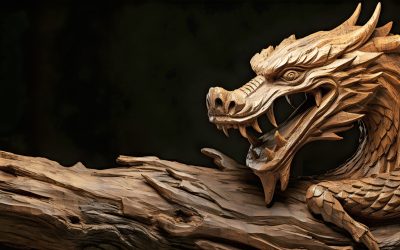
STATE OF THE DAO 2024: Year of the Wood Dragon
Although the Dao is beyond space and time, our external world is constantly changing and we can utilize the energies of each year to improve ourselves and how we fit into the Dao. This is the year of effort and commitment to Build your House. Wood Dragon...
Energy Arts Weekly Classes
Welcome! Here at the Energy Arts Training Center in Longmont, Colorado we teach Tai Chi, Qigong, and Meditation from the heart of the Taoist Water Tradition. Our school is a place where you can learn these Daoist arts to enhance your physical and mental well-being,...

Meditation Minutes Part 06
Meditation Minutes #41 – Four Conditions Tension
Meditation Minutes #42 – Four Conditions Something Doesn’t Feel Quite RightMeditation Minutes #43 – Four Conditions Contraction
Meditation Minutes Part 05
Meditation Minutes #33 - More than Stress ReliefMeditation Minutes #34 - Why Meditation and the SoulMeditation Minutes #35 - Meditation and KarmaMeditation Minutes #36 - Meditation and the Eight Energy BodiesMeditation Minutes #37 - Lao Tsu Vs Chuang TsuMeditation...
Meditation Minutes Part 04
Meditation Minutes #25 – Releasing FearMeditation Mintues #26 – Releasing FrustrationMeditation Minutes #27 – Releasing Joy
Meditation Minutes Part 03
Meditation Minutes #17 – Sitting AlignmentsMeditation Mintues #18 – Line Between Head and PelvisMeditation Minutes #19 – Lifting the Midriff
Meditation Minutes Part 02
Meditation Minutes #9 – Sitting AlignmentsMeditation Mintues #10 – Line Between Head and PelvisMeditation Minutes #11 – Lifting the Midriff
Meditation Minutes Part 01
Thanks for signing up for Meditation Minutes! We really appreciate your support for this community. Enjoy the videos below. Good Practice, Bruce Meditation Minutes #1 - How to Meditate Meditation Minutes #2 - Sitting and Posture Meditation Minutes #3 - Awareness of...
STATE OF THE DAO 2023: Year of the Water Rabbit
STATE OF THE DAO 2023: Year of the Water Rabbit Very Happy Lunar New Year greetings to you all! Officially the Lunar New Year begins Jan 22, 2023 but the ancient Daoists have always used the changes in seasons, lunar cycles, and celestial events to tune into the...
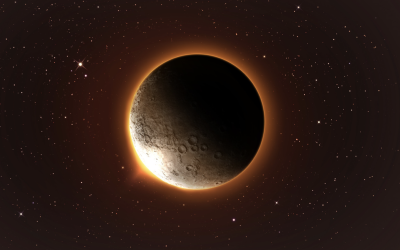
Utilizing the Energy of the Lunar Eclipse
Daoism and Celestial Practices Daoists traditionally worked with celestial bodies and events through the macrocosmic/microcosmic relationship that both affects and reflects the bodies of human beings. Full moons and eclipses, for example, offer extraordinary...

Summer Solstice: Yang Reaches Its Fullness
Tomorrow is officially the first day of summer! In the Northern Hemisphere, June 21st is the longest day of the year. In Daoist theory, it is the fullest expression of yang energy. It is the tipping point at which yang simply cannot increase any further and yin begins...

Musings on Breath to Qi
Daoist Breathing: Commentary by Dr. Alan Peatfield The last time Bruce taught a seminar on breathing as extensive as he plans to this year, was in 2010 on Crete. For all of us who were there, it was one of the most memorable of all Bruce’s workshops since he began...
Breath to Qi: Going Beyond the Physical
Once you’ve breached the barrier between the physical breath and the qi-breath – which is like passing through an invisible membrane into a slightly different reality – you can begin to pull the qi out of the air that you breathe. Daoist breathing starts with engaging...

Harnessing the Power of a Full Lunar Eclipse
From Sunday night, May 15th, into the early morning on Monday, May 16th, you have an opportunity to tune into the energies of a total lunar eclipse. This celestial event will be visible over South America, most of North America, and parts of Europe and Africa. Whether...
World Tai Chi Day April 30, 2022
Click Here to Watch!
Get 3 Reports
Access 3 free reports: Secrets of Tai Chi, 30 Days to Better Breathing and Dragon & Tiger Qigong.
View Our Best-Selling Programs